Am I feeding my child enough? Understanding Child Food Portions and Appetite
Working out “how much food is right” for our children can feel stressful, especially when they are past the weaning stage.
In this blog I cover how most children can eat the amount their bodies need when they are offered regular meals and snacks, a variety of foods, and the autonomy to decide how much to eat. While portion sizes recommendations can be used as flexible starting points, your instinct and knowledge of your child is equally helpful.
Why do parents and carers worry about how much children eat?
It’s common to compare your child’s intake with others, worry about picky eating or wonder whether they are eating too little or too much. It’s easy to feel overwhelmed by conflicting opinions, especially when every child seems to have a unique appetite, a different background and set of preferences.
Do children know when they are hungry?
What’s reassuring is that children are naturally able to regulate their appetite when they are supported with a responsive feeding environment. Appetite varies day to day, and this variation is normal. Encouraging children to listen to their hunger and fullness cues fosters a healthy relationship with food.
It can be helpful to observe patterns over time and trust that appetite will vary. Combining instinct with guidance and experience, can help us feel reassured about nutritional needs, while nurturing confidence and connection.
How to tell if your child is eating enough
Many caregivers tell me they feel like they are working it out as they go along, and research shows that most of us do end up relying on instinct and experience. That instinct is a real strength, but it does help to have a little back-up sometimes.
Child Food Portions: A Responsive Feeding Guide was created to do exactly that, offering simple starting portions for toddlers through to older children, without rules or measuring. It brings together UK portion guidance, responsive feeding principles and the authoritative parenting approach, so you can support your child’s growth and development.
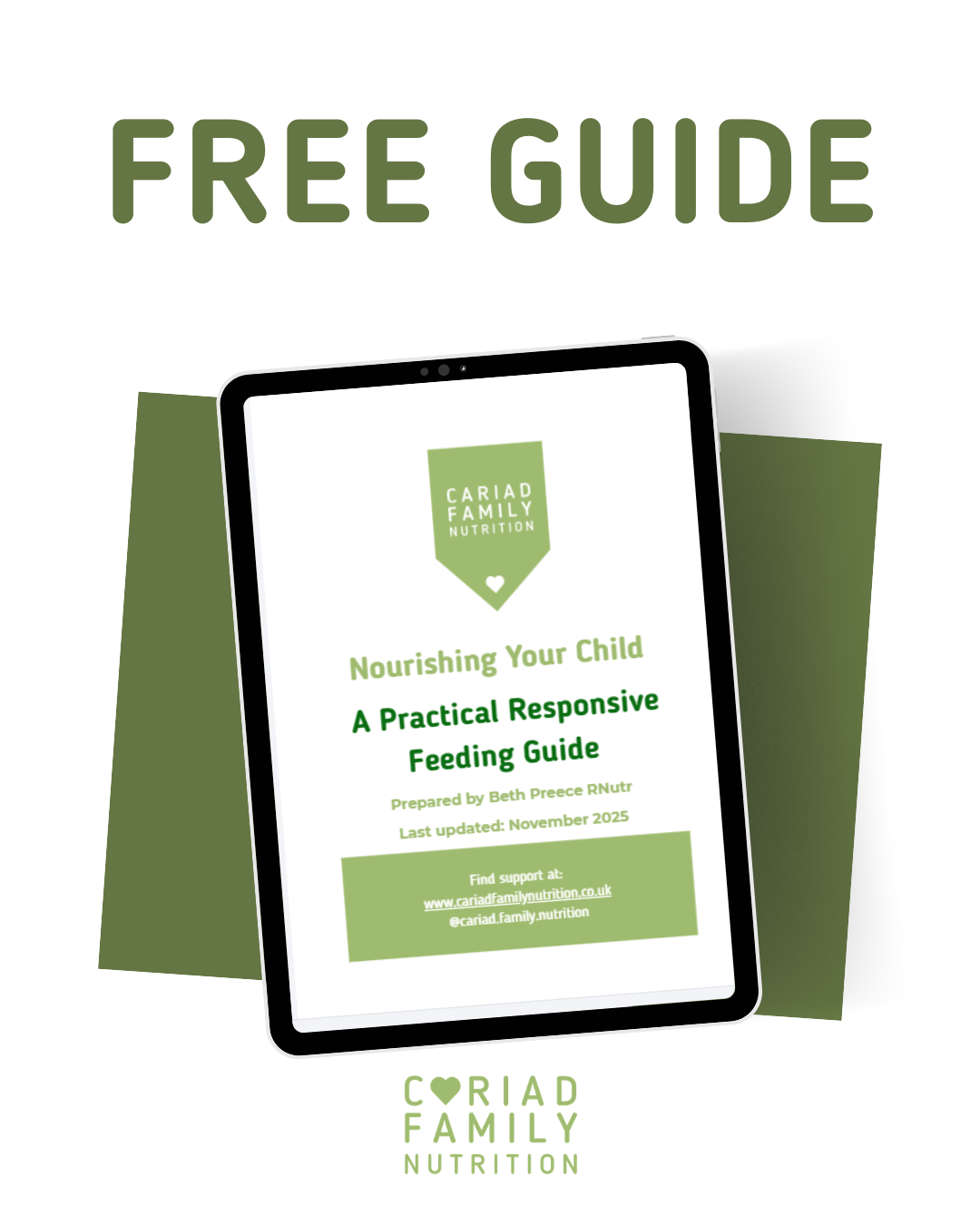
Inside, you will find:
Clear, age-appropriate starting portions.
Practical ideas for structuring regular meals and snacks that work with different budgets.
Trauma-informed tips for children who have experienced food insecurity, adoption, foster and kinship care, to help build food trust and safety over time.
Simple self-reflection questions so you can gently explore your thoughts and apply the information to your family.
This guide has been designed to help you feel more confident about the amount of food you’re offering, while still trusting your child to listen to their own body. It is here to support you but does not replace professional advice tailored to your child’s individual needs.
Further reading
Good Enough Nutrition for Children and Families Blog
Derbyshire Community Health Services NHS Trust Derbyshire Family Health Services Portion Sizes. Available from: Healthy portion sizes for children, accessed April 2026.
Department of Education (2024) Portion Sizes for Children aged 1 to 5 years. Available from: Portion_sizes.pdf, accessed April 2026.