From Bottle to Cup: Our Journey from Infant Formula to Cow’s Milk
As both a Nutritionist and an adoptive mam, eating in my house is a blend of professional know-how and personalities. When my daughter joined our family, she was bright, inquisitive and had a history in foster care where breastfeeding was not part of her story. One of the first milestones we faced together was transitioning her from infant formula to cow’s milk and from a bottle to a cup. I’m writing this to share our story in the hope it may help others who are approaching this transition.
More than just milk
Milk can be a powerful source of comfort and nutrition for babies and toddlers. The bottle represents security, warmth, and a moment of closeness with their caregiver. For some families it’s an exciting change to see their little one explore a new taste of cow’s milk or reduce the sterilising of bottles, but for us, moving away from formula in a bottle meant gently guiding my daughter through another change in her routine whilst feeling safe and loved every step of the way.
Government Recommendations: When and How Much Cow’s Milk?
Let’s talk guidelines. According to NHS advice, after 12 months old there is no need to give your toddler any type of formula milk as cow’s milk can be given as the main drink. Before this age, first infant formula is a suitable alternative to breast milk. After your child’s first birthday, cow’s milk can be introduced as a main drink, aiming for around 300–350 ml of pasteurised whole or semi-skimmed cow’s milk per day. This provides the calcium and key nutrients growing toddlers need but avoids letting milk crowd out solid foods.
Starting the Switch: Introducing the Open Cup
An open cup or beaker can be used for sips of water from 6 months of age and from 12 months drinking from an open cup is encouraged as this helps them to sip and is better for their teeth.
The first step for us was introducing an open cup for water as this was not something my daughter had taken to before. I bought her a few different bright, child-friendly and sized cups. On our first attempt, she drank some, I thought “yes, it was a matter of timing!” But then she lost interest.
I decided to make the cup part of our daily routine, alongside her bottle to start with. This gave her a sense of control and predictability, which is so important for children who’ve experienced change. Then, by being playful and curious about her reactions, I could better understand her needs.
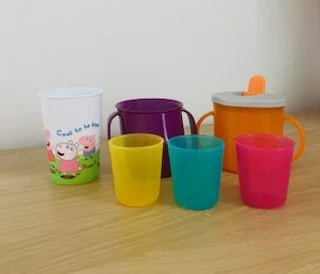
Our first cups
Making it fun
To make the transition to using the cup more enjoyable, I purposefully introduced fun. We held tea parties, inviting her teddy bears and dolls to join. Each “guest” had their own little cup, and together we practised sipping and pouring pretend tea. We took the cups in the bath and used them to make “potions” and pour and make bubbles.
My daughter started associating the open cup with play, and this really spoke her language.
Step by Step
For our family, jumping straight to an open cup wasn’t realistic. After a few weeks, she still wasn’t drinking enough from the cup to stop using the bottle, I introduced a cup with a free-flow spout as a halfway option. This was less daunting, and she took to it straight away. It became a stepping stone, a way to practise drinking without relying on the bottle but still feeling secure.
Tips for a Smooth Transition
Looking back, our journey from infant formula to cow’s milk was nerve-wracking, but one that went easier than I anticipated given the amount of comfort my daughter took from her bottle.
Things that helped:
Going gradually with introducing cow’s milk worked for us: Mixing formula and cow’s milk in the bottle at first, slowly increasing the cow’s milk content. She showed no sign of noticing any difference.
Make it positive: Using games, songs, and tea parties to associate cups with happy moments.
Keep bonding time: Be close with your child while she drinks, just as you would with a bottle, to maintain closeness.
Don’t rush: The process can take days or months. Every child is different, so trust your instincts. Accept and and go at their pace. Its ok if your child takes longer to adapt. My daughter still spills from an open cup sometimes at 3 years old, and she prefers her sippy cup sometimes, that’s ok.
Be curious about your child’s reactions and behaviour, observing and learning from them during this transition.
Be mindful of amounts: Offer water alongside milk and keep an eye on overall fluid intake to ensure hydration.
Thank you for reading - I hope you have found this helpful. If you have questions or would like personalised support, don’t hesitate to get in touch with me.
Further reading:
Drinks and cups for babies and young children - NHS (accessed December 2025)